Abc News Vs Beef Products Inc Case Study
ABC News'south decision to settle a food libel lawsuit over its "pink slime" study sends a dangerous point that a powerful mainstream news organisation is unwilling fight to vindicate its reporting.
And that sends a signal of vulnerability that may invite frivolous libel lawsuits and crippling legal expenses, experts warn.
"Does the settlement send a message to potential litigants, who perchance have but spurious claims, to move forward with filing suits?" said University of Minnesota journalism professor Jane Kirtley. "Probably."
"I ever regret when a news organisation, specially ane who could mount a apparent defense force and has solid fiscal resources, elects to settle," Kirtley told TheWrap.
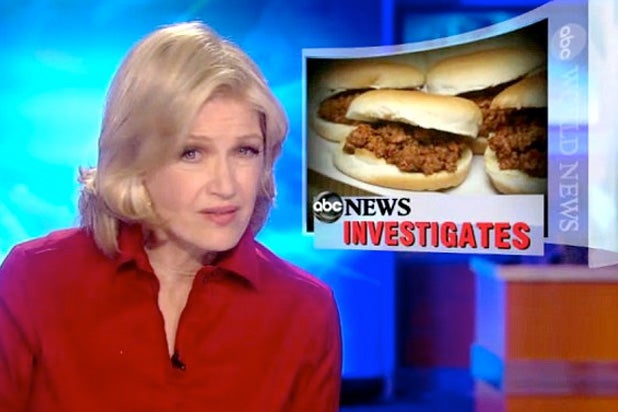
ABC News announced Wednesday that it had reached a confidential settlement of a nutrient libel lawsuit stemming from its 2012 broadcast, "Pink Slime and You." The report discussed how bits of beefiness are removed from fat trimmings in a centrifuge, sprayed with ammonia gas, and added to ground beef and hamburger meat, which a whistleblower called "pinkish slime."
Beef Products, Inc, which calls its product "lean finely textured beef," sued ABC News in South Dakota for allegedly violating that states's so-called ag-gag police force by implying the candy beef is unsafe to eat.
The law, Liability for Disparagement of Agricultural Food Products, bans intentional publication of false "disparagement" of whatever perishable "food product of agriculture" or "health practices with livestock."
The potential financial hitting to ABC News — possibly every bit much as $5.seven billion in amercement — was large enough that its parent company, Disney, mentioned the lawsuit in its quarterly reports to the Securities and Substitution Committee.
Also Read: ABC News on Trial for 2012 'Pink Slime' Report: What's the Beef in $1.9 Billion Case?
Lawyers for ABC News argued during the South Dakota trial that the term "pink slime" is a hyperbolic opinion virtually the beef product that is protected by the First Subpoena, Kirtley said.
Los Angeles media lawyer Ted Boutrous of Gibson Dunn & Crutcher said information technology was difficult to declare winners and losers without knowing the terms of the settlement, but anti-press attacks will continue nonetheless.
"Information technology may well be a great settlement for ABC, but nosotros just don't know and these days attackers of the press feel costless to ignore the facts and will seize on and twist nigh anything to undermine the legitimacy of the media," Boutrous told TheWrap.
"I am concerned well-nigh the flare-up of recently filed defamation suits, and I think news organizations need to fight back hard and explain what they do and why they are doing information technology," Boutrous said.
As well Read: ABC News Striking With $1.2B Lawsuit Over 'Pink Slime' Reports
Kirtley said she thought the "pink slime" example against ABC News "was a 'chilling' one from the starting time."
The settlement "does play into the hands of those who want to undermine public confidence in the mainstream media," especially by those who use the term "fake news" as "a rallying cry for forces on all parts of the political spectrum," Kirtley said.
There are indications that ABC News settled on somewhat favorable terms.
Every bit of Wednesday, ABC News did non issue any retraction, correction, or apology, or remove its 2012 circulate, "Pinkish Slime and You," from the ABC News website, which libel plaintiffs typically demand equally part of a settlement.
Also Read: Beak Cosby Juror Says 2 Holdouts Prevented Guilty Verdict
By settling, BPI gave up its adventure to enquire the jury to award $1.9 billion in damages, which would accept been tripled to $5.7 billion under the treble amercement provision of the ag-gag law.
ABC News may have wanted to avert rolling the dice with a jury subsequently the website Gawker was hitting last yr with a $140 million jury award in a sexual activity tapes / privacy case brought by Terry Bollea, aka wrestler Hulk Hogan.
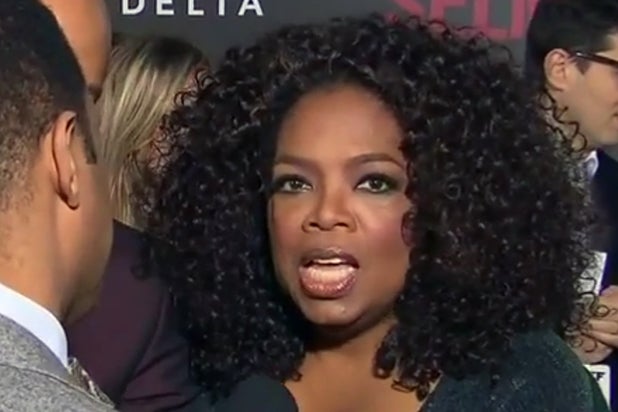
Oprah Winfrey went to trial in 1998 and beat an ag-gag lawsuit brought confronting her by Texas local cattle ranchers over her television set segment, "Dangerous Food," that examined the potential of mad cow disease infecting U. S. cattle.
'Pink Slime' and 5 More Legal Fights Over Food Insults (Photos)
-

Top Television talents including Oprah Winfrey have been hitting with food libel lawsuits, otherwise known equally "ag-gag" or "veggie libel" lawsuits. Well-nigh of these claims fail, simply they are expensive to fight. Here's a look at some recent food lawsuits.
Getty Images -
 ABC
ABCPink Slime
ABC News was sued in South Dakota and defendant of violating an ag-gag police force that bans purposely publishing false "disparagement" of any perishable "nutrient product of agriculture" or "health practices with livestock."
-
ABC News was sued over its 2012 report proverb that a processed beef byproduct chosen "lean finely textured beef" is actually processed beef trimmings. ABC reported that the processed beef has been dubbed "pinkish slime" by a onetime government scientist.
ABC -
The trial pits Beef Products, Inc. confronting ABC News. Sawyer has been dismissed from the accommodate, and the case is currently in trial.
ABC - Getty Images
Stopped Cold
Winfrey said on her testify in 1996 that an expert'southward concerns about beef safety "just stopped me cold" from eating another burger.
Winfrey was sued in Texas by ranchers who accusing her of defamation and violating the Texas Faux Disparagement of Perishable Food Products Act.
-
The ranchers claimed they suffered $12 million in lost business after Oprah's segment "Dangerous Food" examined the potential of mad cow illness to infect U. S. cattle.
Getty Images -
The jury and a Texas appeals court sided with Winfrey, ruling that Winfrey did not violate the ag-gag law because she did not purposely publish simulated facts about Texas cattle.
CNN - Getty Images
Merely Winfrey spent an estimated $1 1000000 in legal fees for the trial and defeating the ranchers' appeal.
Afterward winning, Oprah declared, "Free speech communication not just lives, it rocks."
- Wikimedia Commons
McLibel
Perhaps the start nutrient libel lawsuit was brought past McDonald's in 1994 against two vegetarian activists accused of defaming the fast-food chain in London. It was dubbed the McLibel example.
-
The activists, David Morris and Helen Steel, were sued for handling out leaflets accusing McDonald's of paying depression wages, selling cancer-causing food, and buying products from vendors engaging animal cruelty.
Getty Images - WikiCommons
The two activists could non prove the truth of all their claims, and were ordered to pay nearly $100,000 to McDonald'due south.
The pair refused to pay. McDonald's eventually dropped its case.
-
The Guardian paper described the litigation "as the biggest corporate PR disaster in history." The instance toll McDonald's $16 million in legal fees and related costs.
Jerico - Free Stock Photos
Hot Coffee
A 79-year-old New Mexico woman sued McDonald'southward after she was hospitalized for eight days with severe burns acquired by spilling hot java onto her lap.
- Wikimedia Commons
Stella Liebeck claimed that McDonald'south was responsible for her injuries because information technology had received other claims from customers who suffered similar burns from the coffee, but did nothing near it.
McDonald's said it did zero wrong.
- Pixabay
McDonald'due south coffee was heated to 180 degrees, while home-brewed coffee is typically 135-140 degrees.
Liebeck said she was burned on her thighs, buttocks, groin and genital expanse and needed skin grafts.
- Wikimedia Commons
A jury awarded Liebeck $ii.nine million, but a judge and appeals court slashed her laurels to $640,000. The example settled out of court for an undisclosed corporeality.
McDonald's has reduced the temperature of its java to 150 degrees.
-
Liebeck'due south example was spoofed in a Season vii "Seinfeld" episode, "The Maestro." It is likewise the bailiwick of a 2011 HBO documentary movie, "Hot Coffee."
TBS - Getty Images
Craven or Soy?
Earlier this yr, Subway sued Canadian Broadcasting Company over its 2017 report that the world'south largest fast-nutrient chain put soy filler in its chicken sandwiches.
- Subway
Subway called CBC'due south report a "misrepresentation" and sued CBC, accusing the network of defamation.
Earlier filing the lawsuit, the concatenation said it would seek $210 meg in damages. The example is pending.
- Pixabay
A is for Alar
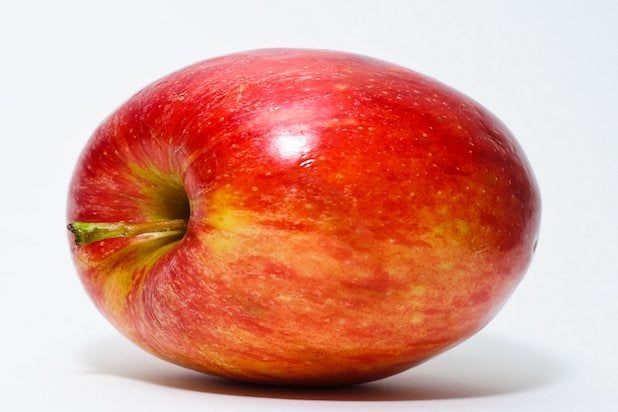
CBS was sued over its 1998 "Lx Minutes" report that Alar, a chemical sprayed on apples, increased the risk of cancer for consumers, particularly in children.
-
Apple growers sued CBS, claiming the report cost them millions of dollar in lost apple sales. CBS stood behind its written report.
Wikimedia Commons -
A federal approximate dismissed the apple tree growers' example, saying CBS relied on a authorities report and that the apple tree growers failed to testify the news written report was false.
Wikimedia Eatables -
After the lawsuit and public outcry, the manufacturer of Alar pulled the chemical from the U.S. market.
Sears - Animal Planet
Animal Filming
More food lawsuits are expected now that it is a felony in many states to covertly film inside animal and agriculture facilities and air the footage.
- Wikimedia Eatables
But future prosecutions may be in question. In 2015, an Idaho gauge struck down that land's criminal filming law, ruling that the ban violates the First Amendment protection for gratis speech.
Other states' illegal filming laws are being challenged in courtroom.















Source: https://www.thewrap.com/why-abcs-pink-slime-settlement-is-a-red-flag-for-free-press/
0 Response to "Abc News Vs Beef Products Inc Case Study"
Post a Comment